
Redefining the Fishing Rod Holder
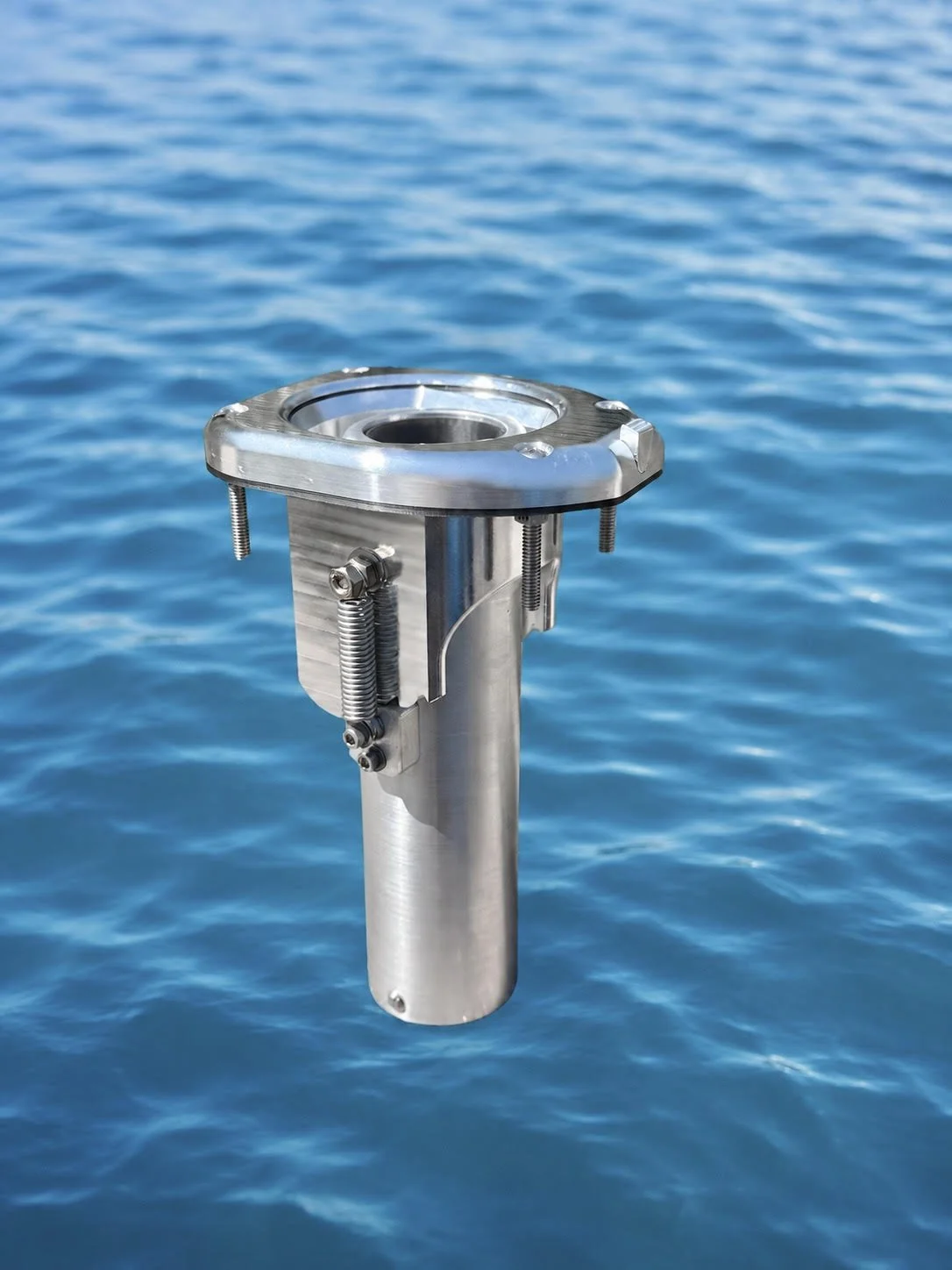
Whether you’re trolling open water, drifting rivers, or running multiple lines from a boat or kayak, SwiftLoc adjusts instantly to your needs. The smooth 360° rotation allows quick repositioning without removing the fishing rod, while the secure locking system stays strong when a fish strikes—delivering stable, dependable performance every time.
Unlike traditional rod holders that force you into fixed positions, the SwiftLoc Adjustable Fishing Rod Holder moves with the way you fish. By combining smooth 360-degree rotation, precise vertical adjustment, and a flush-mount design, SwiftLoc delivers complete fishing rod control without cluttering your space. The low-profile design mounts securely on your boat or dock, reducing snags on rigging and clothing while also eliminating tripping hazards for a safer, cleaner setup.
Dial in your rod angle to match lure depth, water movement, or rod load, then lock it in place and stay focused on what matters most—the bite. The result is stronger hook sets, less fatigue, and a smoother, more enjoyable day on the water.
Built for durability and real-world use, SwiftLoc is designed to handle freshwater and saltwater environments and suit anglers of every skill level—from weekend fishermen to serious tournament competitors.
SwiftLoc features a proprietary adjustable rod holder design and is currently patent pending.
FAQs
How does SwiftLoc hold up in saltwater environments?
All metal components are constructed out of 316L stainless steel. The moving contact surfaces are made from non-metallic, corrosion-resistant, low-friction material. They are also marine-greased, and sealed with O-rings to help minimize salt intrusion. As with reels and other marine gear, we recommend rinsing with fresh water after each use and occasionally disassembling and re-lubing moving parts for long-term performance.
How strong is the SwiftLoc Fishing Rod Holder?
SwiftLoc is built to handle a wide range of fishing styles, from light tackle to demanding offshore applications. The design has been validated using FEA and fatigue cycle analysis in CAD, helping ensure the structure and locking mechanisms can withstand repeated loads, strikes, and long-term use. Combined with precision-machined components, this results in a holder that stays secure under load while still allowing smooth, intentional adjustment.